AI chatbots are no longer just basic website widgets that answer a few common questions. For ecommerce brands, SaaS companies, service businesses, and growing websites, an AI chatbot can become the first layer of customer support, lead qualification, product guidance, and conversion assistance. The best setup does not replace human support. It supports live agent conversations by handling repetitive questions, collecting context, routing visitors, and giving agents better information before they join the chat.
PRZIO helps businesses bring this experience into one growth platform. With the PRZIO Product Chat Assistant, teams can add a conversion-focused AI chatbot to their website while still supporting live agent customer support when a visitor needs human help. This gives customers fast answers and gives support teams more time for high-value conversations.
What Is an AI Chatbot for Website Support?
An AI chatbot for website support is a conversational assistant that appears on your site and helps visitors find answers, products, offers, or next steps. It can respond to frequently asked questions, explain shipping or return policies, recommend products, collect lead details, and guide visitors toward checkout, booking, or contacting a live agent.
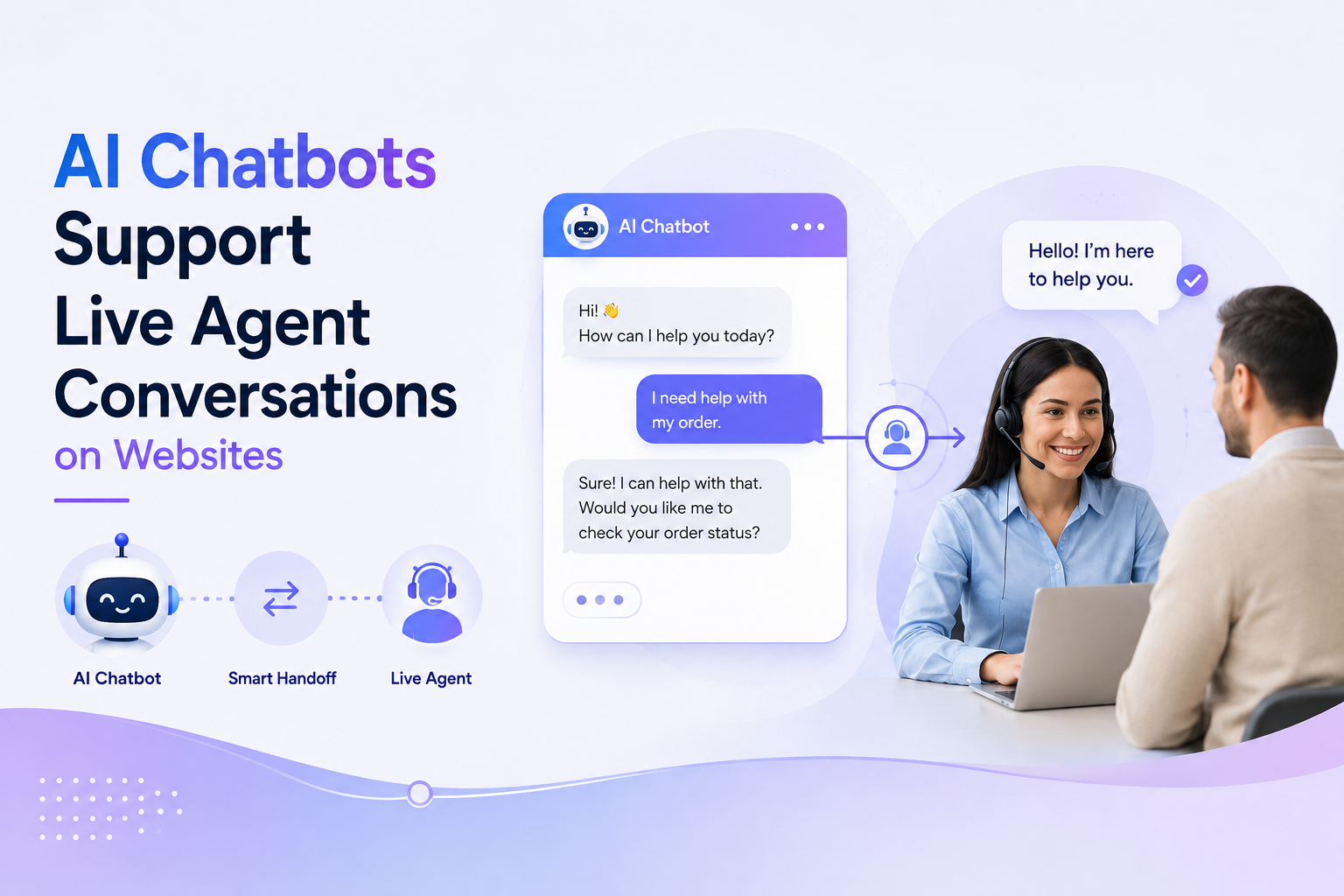
For a modern website, the chatbot should understand the business context, not just follow a fixed script. It should be able to answer based on your pages, products, campaign goals, and customer journey. When the question becomes sensitive, complex, or high value, the chatbot should smoothly hand the conversation to a live support agent.
How AI Chatbots Support Live Agent Conversations
The strongest chatbot strategy is a hybrid support model. AI handles speed and scale, while live agents handle empathy, negotiation, complex troubleshooting, and relationship building. This combination improves both customer experience and team productivity.
Key Benefits of Implementing an AI Chatbot on Your Website
1. Faster Customer Support
Speed matters. If a visitor has to search multiple pages or wait too long, they may leave. An AI chatbot gives immediate guidance and helps reduce support delays. This is especially useful outside business hours, during campaign traffic spikes, or when a small team is managing many customer conversations.
2. More Qualified Leads
A chatbot can ask simple qualifying questions before a live agent steps in. For example, it can ask what product the visitor is interested in, what problem they are trying to solve, what budget or timeline they have, and whether they want a demo. Lead capture can also connect with PRZIO Forms so inquiries can flow into audiences and email campaigns.
3. Better Ecommerce Product Guidance
Online shoppers often need help choosing between products, understanding features, or finding the best offer. A chatbot can guide them through product discovery, answer questions on product detail pages, and suggest the next step. When combined with PRZIO Product Recommendations, brands can create a more helpful shopping experience that encourages higher cart value and fewer abandoned sessions.
4. Improved Live Agent Efficiency
Live agents perform better when they do not start every conversation from zero. If the AI assistant has already gathered the question, page context, customer intent, and contact details, the agent can respond with more confidence. This shortens handling time and makes the conversation feel more personal.
5. Stronger Website Conversion Rates
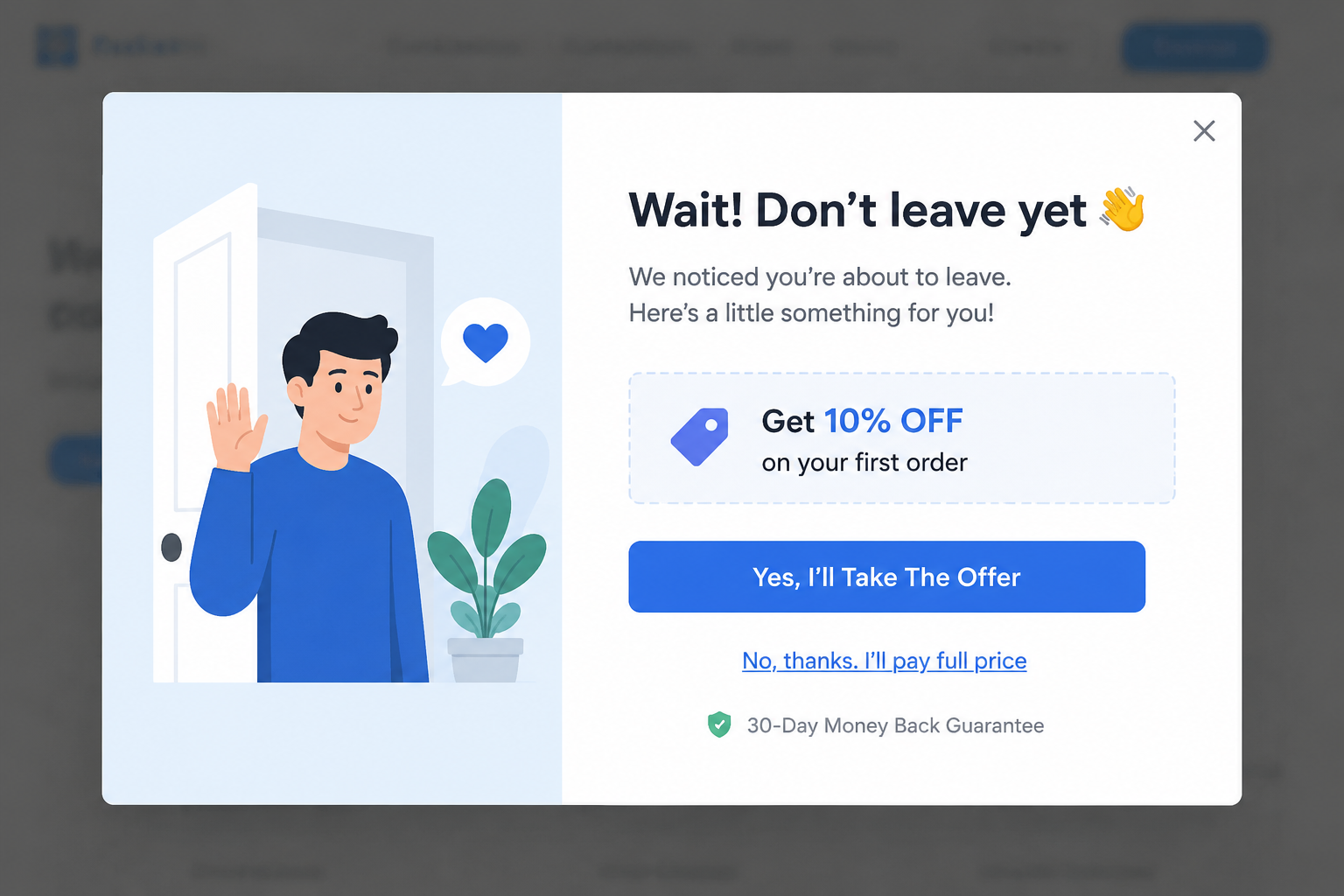
Many visitors leave because they are unsure, distracted, or missing one key answer. A chatbot can remove that friction. It can explain delivery options, clarify product value, help visitors find the right page, offer help before exit, or connect them with a person. For growth teams, this turns support into a conversion channel.
Practical Steps to Implement an AI Chatbot
- Define the chatbot goal: Decide whether the main purpose is support, lead generation, ecommerce guidance, demo booking, or all of these.
- Map common questions: Review support tickets, sales chats, contact form submissions, and website search queries to identify what visitors ask most often.
- Create helpful conversation paths: Build flows for product questions, order help, contact requests, pricing questions, and live agent handoff.
- Set live agent rules: Decide when the chatbot should transfer to a human, such as complex complaints, enterprise inquiries, urgent support, or high-intent sales conversations.
- Measure results: Track response rate, lead capture, assisted conversions, handoff rate, customer satisfaction, and common unresolved questions.
How PRZIO Helps With AI Chatbot and Live Agent Support
PRZIO is designed for growth teams that want hosting, personalization, campaigns, customer engagement, and tracking in one place. The PRZIO Product Chat Assistant helps you add an AI-powered chat experience to your website with project context and a conversion-focused chat UI. It can assist visitors, support product discovery, collect useful details, and help teams manage conversations more effectively.
PRZIO also supports live agent customer support facilities, so businesses can combine automated assistance with real human help. This matters because customers do not want to feel trapped in automation. They want quick answers when the question is simple and a helpful person when the question needs judgment.
A strong AI chatbot does not remove the human touch. It protects it by letting live agents spend more time on conversations where human expertise matters most.
CTA: Add Smarter Chat to Your Website
Want to integrate this into your storefront or website? PRZIO helps you ship hosting, personalization, campaigns, recommendations, chatbot experiences, and live agent support from one platform. Explore the PRZIO Product Chat Assistant or book a demo with PRZIO to see how AI chat and live support can work together for your business.
FAQs
Can an AI chatbot replace live agents?
In most businesses, the best approach is not replacement. The chatbot answers routine questions and gathers context, while live agents handle complex, emotional, or high-value conversations.
Is an AI chatbot useful for small websites?
Yes. Small teams often benefit the most because a chatbot can answer questions after hours, capture leads, and reduce repetitive support work without requiring a large customer service team.
Where should a chatbot appear on a website?
Good places include the homepage, product pages, pricing pages, checkout pages, contact pages, and campaign landing pages. The best placement depends on where visitors most often need help.
How do I measure chatbot success?
Track response times, resolved conversations, lead submissions, live agent handoffs, assisted revenue, demo bookings, and customer feedback. Over time, these metrics show whether the chatbot is improving support and conversions.